Germany’s energy system is becoming increasingly volatile – and as a result, the need for grid-stabilising ancillary services will change, with certain services gaining importance from 2026 onward. At the same time, grid connection capacities for large stand-alone storage systems will be largely exhausted by 2030.
In this trend report, Marc Untheim, Senior Business Development Manager at The Mobility House Energy, explains the opportunities this creates for co-location projects and which markets will offer particularly attractive revenue strategies in the future.
As the share of volatile renewable energy sources grows, feed-in profiles are becoming increasingly irregular. At the same time, conventional power plants, which have so far played a central role in maintaining system stability, are being phased out. This is driving up both the need for flexibility and the demand for grid-stabilising services. Three categories of ancillary services are moving into focus. Frequency-containing services such as automatic Frequency Restoration Reserve (aFRR) are the most important balancing markets for batteries in Germany, while Frequency Containment Reserve (FCR) remains a significant, though no longer dominant, individual market. Looking ahead, as FCR/aFRR markets approach saturation, manual Frequency Restoration Reserve (mFRR) could also become increasingly relevant for battery storage systems – as is already the case in Bulgaria today.
The gradual decommissioning of conventional power plants is creating an imbalance between supply and demand for inertia. Starting in 2026, Germany will procure inertia through a new market-based product, in which battery storage systems equipped with grid-forming inverters will be able to participate. At the same time, ancillary services for voltage stability, in particular the provision of reactive power, are gaining importance. “For storage operators, this opens up an additional revenue stream that may become particularly relevant in combination with grid expansion and regional congestion situations. Overall, both stand-alone and co-location storage systems will become key components for ensuring system stability in an increasingly volatile energy system,” says Marc Untheim.
Development standstill for stand-alone storage
A clear shift is currently emerging in the German market for large grid-connected storage systems. Grid connection points for stand-alone large-scale storage projects in the high double-digit to triple-digit megawatt range are largely allocated. According to a recent report in the German edition of pv magazine, the latest approvals by distribution and transmission system operators – totalling 78 GW – will tie up available grid connection capacity until around 2030. While the approved projects will still be fully developed and built, a standstill in the development of new large-scale stand-alone projects is expected thereafter, as new grid capacity cannot be created in the short term.
In general, a stand-alone storage project is economically viable if a valid grid connection agreement with approved feed-in and withdrawal capacity is available. However, this requires that any potential grid constraints, such as ramp-rate limitations or dynamic feed-in or withdrawal restrictions, do not limit the storage system’s flexibility to a degree that endangers the business case. Even seemingly mild restrictions can significantly impair the economic viability of a stand-alone storage asset.
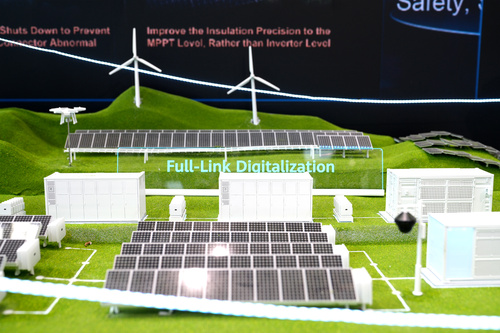
Due to the lack of available grid connection capacity for stand-alone storage systems, the market is increasingly shifting toward co-location storage. Use cases for grey and green energy storage in combination with a renewable energy plant are gaining importance, as the chances of securing a grid connection are often higher. According to Untheim, more and more project developers are opting for green energy storage systems when they are unable to obtain a withdrawal capacity approval.
Brownfield sites are particularly attractive. That is, when an existing PV or wind plant is expanded with a storage system at the same location. The storage system increases utilisation of the existing grid connection point, improves market integration, and creates additional revenue without requiring a new connection. Another scenario is greenfield co-location storage, meaning an entirely new project without existing infrastructure.
These concepts primarily aim to increase the profitability of newly planned PV plants, as pure PV projects often fail to be economically viable due to declining market premiums. Co-location can restore profitability – although, as a green energy storage system, it comes with a limited degree of operational flexibility.
“New momentum is emerging from the current debate on the German MiSpeL regulation (market integration of storage systems and charging points), which is intended to enable mixed operating models combining grey and green energy. If storage systems are permitted to switch flexibly between green and grey use cases, this would significantly improve profitability. Precisely these kinds of hybrid models could become the dominant trend and open the next growth phase for the co-location storage market,” says Marc Untheim.
“The core commercial model for BESS remains revenue stacking – regardless of whether the system is a stand-alone or co-location asset. What matters is a multi-market and opportunity-cost-based optimisation strategy that integrates all relevant markets while respecting the system’s operational limits, especially restrictions on the allowable number of cycles,” says Marc Untheim.
In addition to primary and secondary balancing services, the spot markets, including Day-Ahead, Intraday Auction, and Intraday Continuous, are the most attractive. For conventional two-hour systems, this market combination currently offers the best risk-return ratio and the highest value creation.
For green energy storage systems, however, the potential is limited: they are permitted to feed electricity into the grid but not to draw from it. As a result, participation in the Frequency Containment Reserve (FCR) is entirely excluded, and access to automatic Frequency Restoration Reserve (aFRR) is likewise restricted. In such cases, the revenue potential shifts toward spot market participation, positive aFRR, and load shifting – that is, shifting energy delivery from the less valuable midday hours to the evening or morning hours, when market prices are typically significantly higher.
“When assessing dynamic large-scale storage markets, the focus is less on the country itself and more on the structural factors that make a market attractive. Key elements include political frameworks such as support programmes, accelerated permitting processes, and decarbonisation targets. Equally important is market design: which markets are open to energy storage, how high is the share of renewables, and what level of volatility and price spreads emerge in short-term electricity markets,” explains Marc Untheim.
Based on these factors, Eastern and Southern Europe stand out in particular. Countries such as Bulgaria and Poland are showing strong momentum because they combine attractive market designs with rising shares of renewable energy and ambitious regulatory developments. Those who manage to optimise successfully in one market can often transfer the same model quickly to other European countries, since the fundamental energy-economic mechanisms are similar across Europe. In Spain, Italy, and Greece, massive growth in solar PV is significantly increasing arbitrage opportunities – and, as a result, the attractiveness of storage systems.