Europe’s power grids are not being fully utilized – and with a changing generation mix, inefficiency is leading to energy waste in the form of curtailment and lost renewable generation. As renewable generation surges ahead of infrastructure and demand, artificial intelligence is emerging as a critical tool to reduce waste, balance systems, and unlock new value across the energy transition.
In Britain’s north, the curtailment of wind power is a persistent problem. And it’s trending in the wrong direction. A report published in January by energy and power market intelligence provider Montel found that more than 10 TWh of wind power was curtailed in Scotland in 2025 – a 22 percent increase on the previous year. The costs of this amount of curtailed energy were astronomical. Payments to curtailed wind generators reached GBP 343 million, while balancing costs – bringing alternative generation online to compensate and fill the gap – exceeded GBP 1 billion in 2025.
At the heart of the issue is geography. Onshore and offshore wind developers are drawn to northern Scotland for its strong wind resources and low population density. But this places generation far from major centers of electricity demand. The mismatch is stark: the curtailed electricity in 2025 alone could have powered nearly all of Scotland’s household demand, according to Montel, based on energy regulator Ofgem consumption averages and Scottish government housing data.
This imbalance is compounded by transmission bottlenecks. Limited infrastructure between northern and southern Scotland, across the SSEN and Scottish Power grid regions, and further south into England, restricts the flow of electricity. As a result, vast amounts of curtailed renewable energy are wasted – energy that, if managed intelligently, could have been put to good use.
Simon Evans, a Director at engineering consultancy Arup, points out that curtailment is occurring in regions that also experience high levels of energy poverty. “People aren't necessarily able to afford to heat their houses, which is a massively unfortunate situation to be in,” observed Evans, speaking to The smarter E Podcast in March. Better system management could address both problems simultaneously.
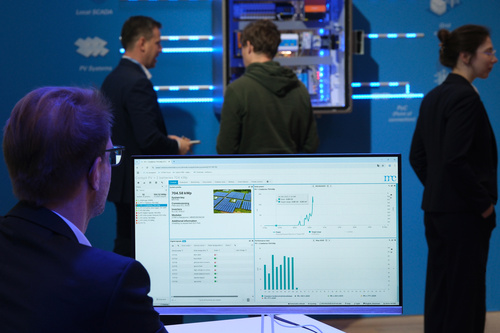
“Instead of curtailing,” continued Evans, “[an intelligent network could] turn on some smart switches in these houses that could heat their hot water tanks or their storage heaters so that we can reduce the amount of curtailment needed, whilst also providing a social benefit – which is going to reduce healthcare costs, welfare increases, et cetera.”
Such measures would not eliminate curtailment entirely, but they could significantly reduce it while delivering tangible social benefits. More broadly, they illustrate how digitalized, intelligent energy systems – powered by machine learning, large-language models, and AI – can connect different sectors like electricity and heating to unlock new forms of flexibility.
At the policy level, the European Commission is positioning AI as a cornerstone of the energy transition. In two 2025 publications, the European Technology and Innovation Platform for Smart Networks for Energy Transition (ETIP SNET) outlined both a broad long-term vision as well as practical measures for the near-term. The updated “Briefing Note” addressed Transmission and Distribution System Operators directly.
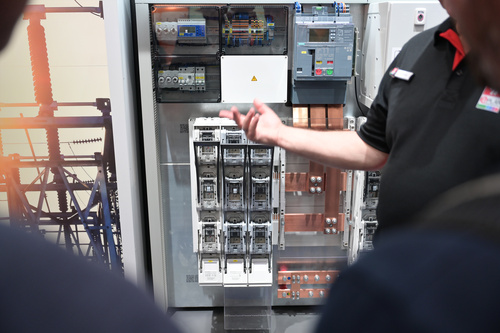
The vision laid out by ETIP SNET is one in which European electricity networks are fully digitalized and intelligent, thereby operating with greater efficiency, resilience, and flexibility – all while accelerating decarbonization. These grids of the future deploy AI to reduce system losses, avoid curtailment, manage distributed energy resources such as rooftop solar and residential batteries, and detect cybersecurity threats. They would also enable the orchestration of increasingly important flexibility resources, such as demand response and vehicle-to-grid. In this context, AI is both optimizing grid operations and enabling the coordination and aggregation of distributed assets into flexible capacity – effectively underpinning new market structures for balancing and congestion management.
ETIP SNET proposed a phased adoption. Pilot projects would be deployed through 2027, followed by large-scale implementation and full implementation from 2030 onward – positioning Europe as a global leader in AI-driven smart grids.
However, significant barriers remain to the widespread deployment of AI in grid operations. Chief among these are the availability and quality of data, especially across fragmented legacy systems, and the challenge of integrating new digital tools into existing infrastructure. A shortage of digital and data skills within network operators further constrains adoption, while rising cybersecurity risks introduce new operational vulnerabilities. An evolving regulatory landscape – including frameworks such as the EU AI Act, GDPR, and NIS2 – is also shaping how data can be used and how AI systems must be governed.
At the core of these applications are foundation models – the large-scale AI systems underpinning tools like ChatGPT (specifically, the GPT, Generative Pre trained Transformer). Training these models requires vast datasets and significant computational resources, making this stage the most intensive in AI development.
The GridFM project is working to build open-source foundation models tailored for electricity networks. In September 2025, RWTH Aachen University hosted a workshop bringing together developers, network operators, and technology providers. Participants highlighted the rapid progress being made. “2025 was the year that GridFM moved from vision to reality,” said Thomas Brunschwiler, Principal Research Scientist at IBM Research. The technology and AI company was a sponsor of the event and is a GridFM proponent. “The path forward requires compute-efficient solutions for real-time operations and optimal planning,” he added, pointing to promising use cases. Brunschwiler noted that the GridFM model must “remain robust under topology changes,” and be able to integrate diverse data types – including network graphs, images, and text – while adapting to evolving system constraints.

Another key application is the development of digital twins – virtual replicas of electricity networks. The AMAZING project, led by the FZI Research Center for Information Technology, focuses on building and calibrating these models using AI. Drawing on data from five German grid operators, the project aims to demonstrate how AI can integrate disparate data sources into coherent, real-time system models.
This capability is an important aspect that has Evans “very optimistic” about the impact AI can have on electricity networks. “If you can manage data more effectively and that data can be put to work to improve the asset through better decisions, that has huge opportunity,” he said, pointing to the convergence of digital and physical systems.
However, trust remains critical. AI systems must be transparent, reliable, and validated in real-world environments – particularly when applied to critical infrastructure. The AMAZING project addresses this by working directly with German grid operators to ensure practical, demonstrable outcomes. Evans describes it as, “making sure the right people see the right things.”
At the Solar Quality Summit hosted in Barcelona this February, David Moser of the Becherel Institute echoed this point. As the solar industry scales toward 1 TW of annual installations, AI has significant potential to mitigate issues like labor shortages and other industry bottlenecks – although human operators will remain central. Moser addressed both trust in AI and liability concerns, emphasizing that while AI will assist and accelerate decision-making, operational personnel will remain responsible for the final decision.
One area where AI is already delivering measurable value is in PV forecasting. Research published in 2023 by teams from the Massachusetts Institute of Technology (MIT) and the École Polytechnique Fédérale de Lausanne, Switzerland (EPFL), demonstrated that AI models can significantly improve solar generation forecasts. The models were especially accurate over short time horizons – minutes rather than hours – but still outperformed conventional approaches when modeled across hours or even intraday.
Notably, transfer learning – the transfer of knowledge from an already trained model – enabled accurate forecasts even in regions with limited installed capacity and historical data, making the approach particularly valuable for new solar sites.
For grid operators, improved forecasting translates directly into better system management. As the researchers noted, AI-driven forecasts can help “optimize energy distribution and demand response systems,” enabling more efficient use of solar power and reducing the operational challenges associated with renewable variability.
As highlighted in ETIP SNET’s publications, the application of AI in grid operations is still largely being driven by research institutes and academia. Encouragingly, the development of open-source models could help translate these advances into scalable commercial solutions.
Beyond system balancing, AI is already being deployed in predictive maintenance, enabling grid operators to detect faults earlier, reduce outages, and extend asset lifetimes. By analyzing data from sensors and historical performance, these systems can identify potential failures before they occur, allowing operators to intervene proactively rather than reactively. Similar approaches are already being deployed by utilities and technology providers, with companies such as Siemens and Kraken Technologies applying AI to optimize grid operations, manage distributed assets, and improve system efficiency in real-world networks.
The economic case for AI grid integration is undeniable. Improved forecasting alone has been shown to reduce operating reserve costs by 10–15 percent in some systems, according to analysis by the International Renewable Energy Agency (IRENA). While Montel’s report underscores the high cost of inefficiencies in the United Kingdom’s grid operation, similar dynamics are at play all across Europe. In Germany alone, curtailment costs in 2025 reached a staggering EUR 435 million.
And investors are taking note. Gerard Reid, co-founder of London-based corporate finance firm Alexa Capital, has described AI as “the greatest technology shift in the history of mankind.” Within electricity networks specifically, he argues, “digitalization is reshaping the energy system from within.”
Did you miss the podcast? No problem! The recording and lots of other interesting content are available to you on The smarter E Digital.