Flexibility is the key to the energy transition and companies can benefit from it. Around half of the electricity in the European Union (EU) is now generated by renewable sources of energy. However, wind and solar generation is variable as it depends on the time of day and the weather. This causes grid feed-in to fluctuate, with prices at the power exchange rising and falling accordingly. Flexibility is the key to aligning demand and supply more effectively. Intelligent load management allows companies to not only cut their energy costs – by marketing their flexibility in the electricity market, they can also unlock new revenue streams. Solutions and technologies for more flexibility will be presented at EM-Power Europe in Munich from June 23–25. The international exhibition for energy management and integrated energy solutions will take place as part of The smarter E Europe, Europe’s largest alliance of exhibitions for the energy industry. Visitors will have the opportunity to learn about energy and load management, marketing flexibility, advanced metering infrastructure, energy as a service and much more. The accompanying EM-Power Europe Conference on June 23 is dedicated to the topic of flexibility in industry and commerce.
Demand-side flexibility holds enormous potential. It can balance out fluctuations in power generation, relieve grids during peak times and support supply security. “Europe’s power system needs demand-side flexibility to keep supply and demand in balance as renewable generation grows and grids come under increasing strain,” says Michael Villa, CEO of smartEn, the European industry association for flexible demand management.
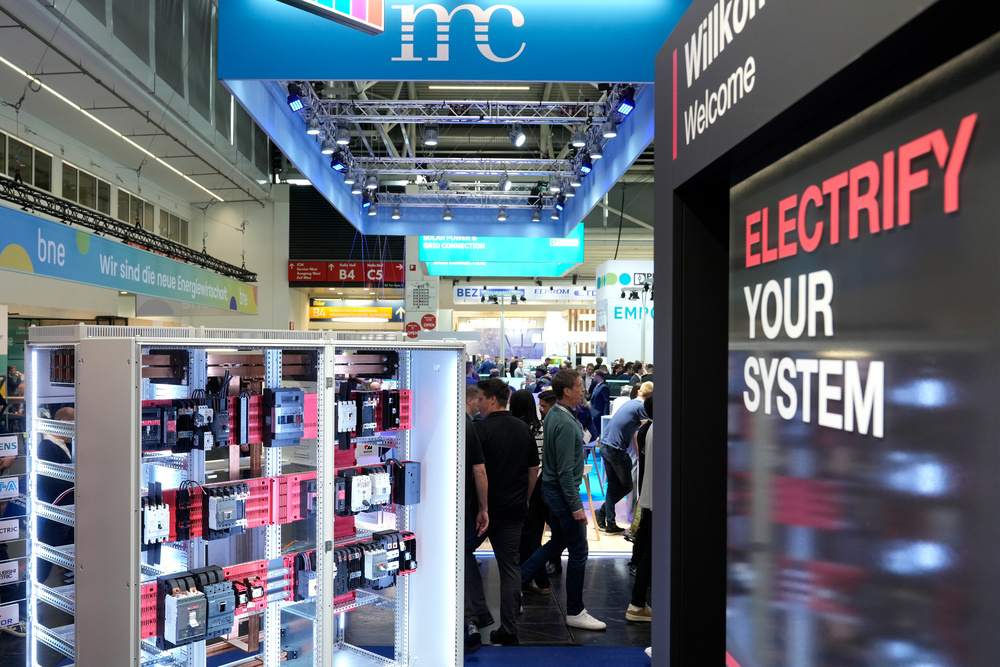
How well companies can adjust their internal operations to maximize the use of renewable electricity is key. They do not necessarily have to invest huge sums into new installations to exploit their flexibility potential. Ornua Foods Deutschland shows how it can be done. Each year, they process around 80,000 metric tons of Irish butter for the German and Austrian market. Since 2023, they have used an AI-based energy management platform that aligns electricity consumption with a dynamic electricity tariff. Compressor, cold store and steam generator operating times are optimized 24 to 72 hours in advance and are adjusted to requirements and market signals in real time. With savings in the first year exceeding 9,600 euros, the investment paid for itself in just 14 months.
It pays off for businesses to be flexible. “By shifting electricity use to times when clean power is abundant, industrial and commercial companies can lower energy costs and even generate new revenue by providing flexibility services to the grid. The technologies and solutions already exist – from smart energy management to aggregated demand response. What Europe needs in 2026 are strong policy signals and market frameworks that fully enable demand-side flexibility to participate in electricity markets and support a more resilient, efficient energy system,” says Michael Villa.
For companies that use a lot of energy, flexibility is the key to reducing energy costs. This includes steel and cement plants as well as aluminum, paper and glass factories. These companies may find it worthwhile to quickly purchase cheap renewable energy from the spot market on the same day (intraday trading) or on the next day (day-ahead trading) and then selling their self-generated or stored electricity at higher prices. Special service providers, such as Energy2market, handle the marketing of electricity. With its multi-market approach, the company markets battery storage in the industrial sector depending on the season. Kai Becker, Head of Development at Energy2market, says that peak shaving is useful in the winter because it prevents expensive peak loads in electricity consumption. One of the marketer’s customers, an aluminum plant, saves 200,000 euros per year through these measures alone. During the summer months, trading on the short-term electricity market is worthwhile due to significant daily fluctuations in spot market prices.
Sector coupling and revenue through power-to-heat
It can also be worthwhile to market the flexibility of heating systems, for example when it comes to power-to-heat in process heat generation. If there is surplus electricity in the power grid, it can be diverted from the grid to heat up hot water tanks. The Munich-based company Entelios has experience with such projects. It reports that retrofitting a pre-existing 10 megawatt boiler pays off after just a year and a half. “Flexibility is a key resource in our volatile energy system. Our KRITIS-certified hardware and software platform automatically controls industrial loads, storage and sector-coupled plants, enabling companies to get the best price and serve the grid. This reduces energy costs and unlocks additional revenue through intraday trading and balancing reserve,” says Dr. Florian Hirsch, CTO of Entelios. The balancing reserve is used to offset short-term imbalances in the grid and maintain a stable power line frequency of 50 hertz.
EM-Power Europe 2026 shines the spotlight on individual concepts
Most businesses have already recognized the significant financial benefits of flexibility and load management: According to a survey by McKinsey & Company, 80 percent of surveyed companies in Germany alone are already implementing or planning such measures. However, demand-side flexibility is rarely a standard product because every business has its own individual processes, load profiles and technical requirements. Implementation requires tailored concepts that align with individual operational requirements. You can find guidance and suitable technology partners at EM-Power Europe.
The smarter E Forum will provide further inspiration through its presentations. On June 24, the smartEn association will present successful examples in practice in its session titled Demand-side Flexibility in Action: Best Practices from the Flexible Demand Management Industry. The day before, the German Association of Energy Market Innovators (bne) will outline the planned amendments to the German Renewable Energy Sources Act (EEG) 2027, which are to remunerate the flexibility of batteries and charging infrastructure in the lower output ranges. Flexibility is also one of the main topics of the EM-Power Europe Conference on June 22–23, 2026, with sessions titled Electric Vehicle Grid Integration – Scaling up Flexibility and Turning Industrial and Commercial Demand Side Flexibility into Value.
On May 5, EM-Power Europe will host a webinar titled „Demand-side Flexibility in Practice: Real Success Strategies for Energy-Intensive Industries (Nachfrageseitige Flexibilität in der Praxis: Reale Erfolgsstrategien für energieintensive Branchen)“ ein. It will cover the technical, financial and regulatory aspects of demand-side flexibility, with a focus on how energy-intensive industries can turn flexibility into a competitive advantage.
You can find further information on flexibility here